
Let’s take a deeper dive into exactly what a fixed wing aircraft is. Fixed wing aircraft are most often referred to as airplanes, or sometimes just “planes”. Every fixed wing aircraft has wings that use forward air speed to generate lift to keep the aircraft in the air. In modern day aviation, airplanes are capable of traveling across the globe with passengers and cargo. Historically, gliders were the first aircraft, which were unpowered aircraft which had to be pushed off of a building or hill to fly. Then in 1903, Orville Wright made history near Kitty Hawk, North Carolina, USA as the first man to successfully take off, pilot and land a motor-powered aircraft.
Most modern aircraft have the same components in common. We’ll dive into each of these components and their sub-components and learn a little bit about them and why they are so crucial.
Accessories
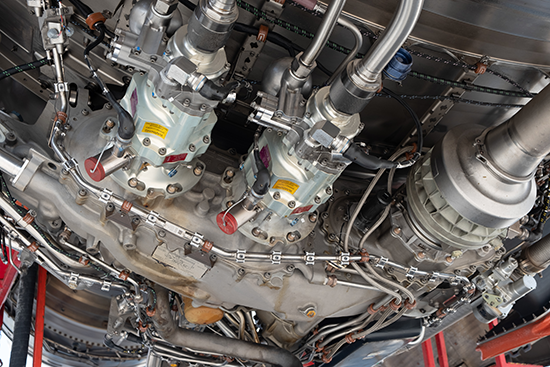
When it comes to the world of aviation, the word accessory is a very broad term. When most people think of aircraft accessories, the first things that come to mind are components like starters, fuel pumps, generators, magnetos, etc. An accessory can be any mechanical, electrical or electronic component of an aircraft so long as it’s not the airframe, powerplant, propeller, or radios and instrumentation. An accessory can be anything from a supercharger or a strobe light, to a gas cap, or even a single switch.
Airframe
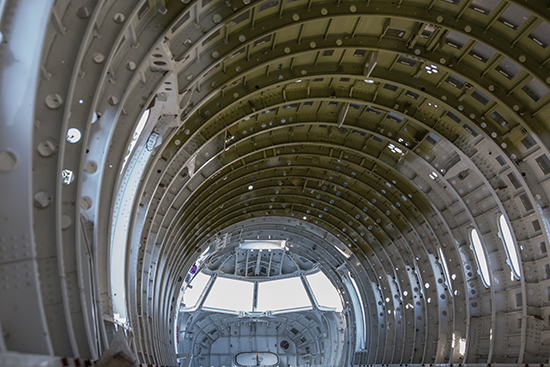
The airframe is the main structure of the airplane and it excludes, the powerplant, the propeller, accessories, pilot instrumentation and communications equipment. The main components of the airframe are the wings, fuselage, tail assembly and the landing gear. During flight, the airframe is responsible for withstanding all aerodynamic forces in addition to the stresses of fuel, passengers and cargo.
Powerplant
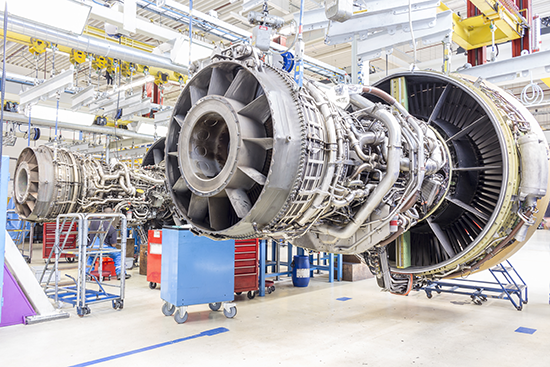
In the world of aviation, the engine is referred to as the powerplant. The powerplant is responsible for providing power to operate various components of the aircraft in addition to providing the power necessary to maintain thrust. Most aircraft powerplants are either piston engines or gas turbine engines, but can included electric motors in the case of drones and unmanned aerial vehicles or UAVs.
Propeller
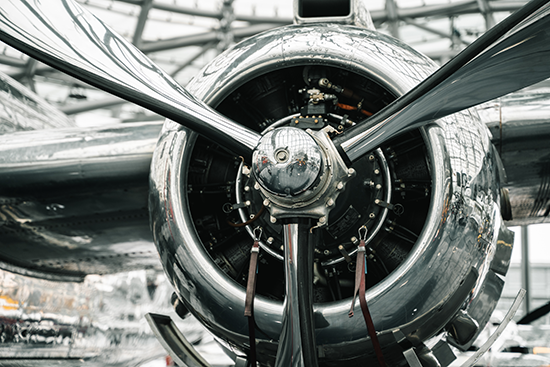
In short, the propeller is responsible for taking the rotational energy of the engine and creating thrust to to propel the aircraft. There are many types of propellers such as fixed pitch, manual pitch and automatic variable pitch or “constant-speed” types. Propellers are also made of various materials, but are commonly made of wood, metal or composite materials such as plastic and carbon fiber.
Radio & Instrumentation
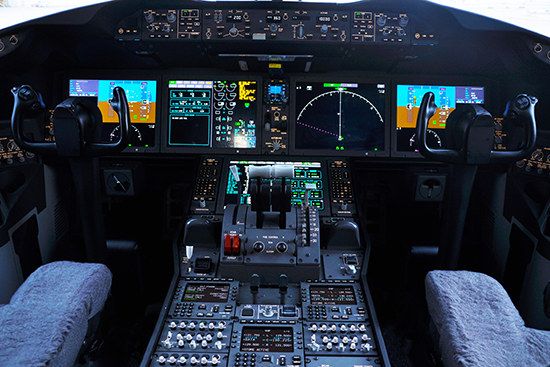
The flight instrumentation and radio are the devices in the cockpit of an aircraft that provide the pilot with data during flight. The radio system allows pilots to navigate to their destination and communicate with air traffic control. The flight instruments are broken up into five categories, the pitot-static system (altimeter, airspeed indicator and vertical speed indicator), the compass system, the gyroscopic system (attitude indicator, heading indicator and turn indicator), flight director system, and the navigational systems.